-
About Jordan
About Jordan
-
Client Testimonials
Client Testimonials
-
Selling My Home
Selling My Home
-
Buying a Home
Buying a Home
-
Contact Jordan
Contact Jordan
About Jordan

Client Testimonials

Selling My Home

Buying a Home

Contact Jordan

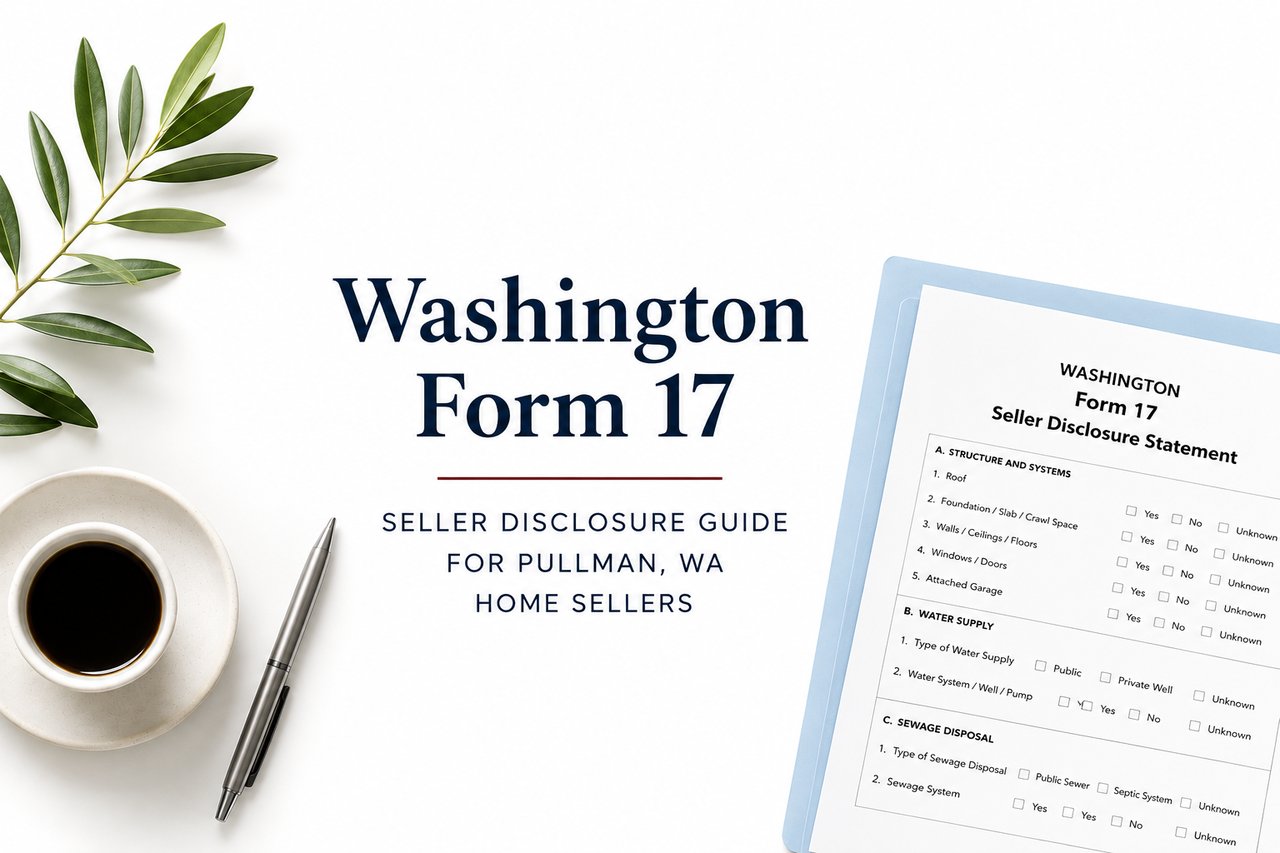
If you're preparing to sell your home in Pullman, one of the most important documents you'll complete is Washington's Form 17 Seller Disclosure Statement. While it may seem intimidating at first, the purpose of Form 17 is straightforward: it helps buyers understand the property's condition based on what you actually know as the seller.
Whether you're selling a home on Sunnyside Hill, Military Hill, Pioneer Hill, College Hill, or another Pullman neighborhood, providing complete and accurate disclosures helps create a smoother transaction and builds trust with prospective buyers. Understanding what belongs on Form 17 before your home hits the market can also reduce delays later in the closing process.
Form 17 is Washington State's standard Seller Disclosure Statement for most residential properties containing one to four dwelling units. State law requires most sellers to disclose known information about the property's condition so buyers can make informed purchasing decisions.
The disclosure isn't intended to guarantee the condition of the home or replace professional inspections. Instead, it asks sellers to answer questions honestly based on their actual knowledge at the time the form is completed.
Some property transfers are exempt from the disclosure requirements, including certain estate, foreclosure, and court-ordered sales. If your home was built before 1978, you'll also complete the federally required Lead-Based Paint Disclosure.
Many buyers begin evaluating a property's condition long before scheduling a home inspection. A complete and thoughtful Seller Disclosure Statement gives buyers additional confidence and often answers common questions before they become concerns.
Providing accurate information early can help:
Remember that Form 17 reflects your knowledge as the seller. If you genuinely don't know the answer to a question, "Unknown" is often the appropriate response instead of guessing.
Although Washington law establishes disclosure requirements, many Pullman sellers benefit from completing Form 17 before their home is officially listed. Preparing it early gives you time to gather documents, review repair records, and verify information before buyers begin asking questions.
Having the disclosure ready before offers arrive also helps buyers make informed decisions and may prevent delays during negotiations.
If something changes after you've delivered Form 17 to a buyer—such as discovering a new plumbing issue or roof leak—you should promptly update the disclosure so everyone has accurate information moving forward.
Washington's Seller Disclosure Statement is organized into several sections covering nearly every major component of a residential property.
Sellers disclose known information regarding the home's roof, foundation, framing, additions, windows, siding, crawlspace, basement, and any structural repairs or known defects.
This section includes heating and cooling equipment, plumbing, electrical systems, water heaters, fireplaces, built-in appliances, and other major home systems.
Depending on the property, you'll disclose information about public water, private wells, public sewer, or septic systems, including known problems, repairs, inspections, or maintenance history.
Form 17 asks about issues that could affect the property's health or safety, including mold, asbestos, lead-based paint, underground storage tanks, radon testing, pest activity, and environmental contamination when known.
Sellers should disclose known easements, encroachments, shared driveways, boundary disputes, unpermitted improvements, pending legal matters, and code violations affecting the property.
Every property is different, but certain questions appear regularly in Pullman real estate transactions due to the area's mix of established neighborhoods, hillside properties, rental homes, and owner-occupied residences.
Buyers frequently ask about:
Homes in neighborhoods like Sunnyside Hill, Military Hill, and Pioneer Hill often have decades of ownership history. Gathering invoices, warranties, permits, and maintenance records before completing Form 17 makes answering these questions much easier.
One of the easiest ways to complete Form 17 accurately is by collecting important property records before your home goes on the market.
Keeping these documents together not only helps complete the disclosure but also allows buyers to better understand the care and maintenance that has gone into the property.
Many successful sellers choose to identify potential concerns before listing rather than waiting for a buyer's inspection. Addressing known maintenance items early—or at least documenting them clearly—can make negotiations much smoother later in the process.
A pre-listing home inspection isn't required, but some sellers find it valuable because it helps uncover issues that may eventually appear during the buyer's inspection. Having time to make repairs or prepare documentation before receiving an offer often reduces stress during escrow.
Even experienced homeowners can make mistakes when completing Form 17. Fortunately, most are easy to avoid with a little preparation.
Remember that buyers appreciate honesty. Disclosing a past roof leak along with documentation showing it was professionally repaired is often better than leaving buyers wondering whether the issue still exists.
Many sellers worry they'll look uninformed if they answer "Unknown." In reality, Washington's Form 17 specifically allows sellers to indicate when they genuinely do not know the answer to a question.
You are not expected to investigate hidden conditions or hire specialists simply to complete the disclosure. Form 17 reflects your actual knowledge—not assumptions or guesses.
If you inherited the property, have owned it for only a short time, or never personally occupied the home, you'll likely have more "Unknown" responses than someone who has lived there for many years.
Homes throughout Pullman each have their own characteristics depending on neighborhood, age, and location. While every property is different, there are a few local factors sellers should consider when completing Form 17.
Older homes may have records of electrical upgrades, plumbing replacements, foundation work, or roof repairs that buyers will appreciate reviewing. Properties built on hillsides may have retaining walls, drainage improvements, or grading projects worth documenting. Homes located near Washington State University sometimes have rental histories or previous tenant maintenance records that can also provide helpful context.
If your property is part of a homeowner association, be prepared to provide current HOA information, dues, and any known special assessments. Buyers frequently ask about neighborhood rules, architectural guidelines, and future planned projects.
While Form 17 answers many basic questions, supporting documents often provide valuable context that helps buyers feel more comfortable moving forward.
Useful documents may include:
Providing organized records demonstrates that the home has been maintained and can reduce the number of follow-up questions during escrow.
Even after reviewing Form 17, buyers often have additional questions about a property. Common topics include the age of major systems, previous repairs, remodeling work, utility costs, drainage, neighborhood concerns, and maintenance history.
Keeping your responses consistent with your Seller Disclosure Statement helps avoid confusion. If you discover new information after delivering Form 17, work with your real estate professional to update the disclosure promptly so buyers receive accurate information.
Although not required, some Pullman sellers choose to complete a pre-listing home inspection before putting their property on the market. This can help identify maintenance issues that buyers may eventually discover during their own inspection.
Knowing about potential concerns ahead of time gives sellers the opportunity to make repairs, gather estimates, or simply disclose the information accurately from the beginning. In many cases, this leads to smoother negotiations and fewer surprises once a home is under contract.
What is Washington Form 17?
Form 17 is Washington State's Seller Disclosure Statement used for most residential real estate transactions. It allows sellers to disclose known information about the property's condition so buyers can make informed decisions before completing the purchase.
Do all Pullman home sellers have to complete Form 17?
Most residential sellers do, although Washington law provides several exemptions for certain types of transfers, including some estate, foreclosure, and court-ordered sales.
Should I disclose repairs that have already been completed?
Yes. If you know about a previous issue, it's generally appropriate to disclose both the problem and the repair. Providing invoices or warranties helps buyers understand that the issue has been addressed.
Can buyers cancel after reviewing Form 17?
Washington law provides buyers with certain rights related to the Seller Disclosure Statement. The specific timelines and remedies depend on the circumstances and applicable law, so it's important to deliver the disclosure promptly and accurately.
What if I discover new information after submitting Form 17?
If new material information becomes known before closing, sellers should update the disclosure as soon as possible so buyers have the most accurate information available.
Washington's Form 17 isn't designed to make selling your home more difficult—it's intended to provide buyers with a clear understanding of what you know about the property. Taking the time to complete it carefully, gather supporting documents, and answer questions honestly can help reduce delays and create a smoother transaction from listing through closing.
If you're preparing to sell a home in Pullman, Moscow, or the surrounding Palouse communities, PullmanMoscow.com offers local real estate resources and market insights to help you navigate each step of the selling process. When you're ready for personalized guidance, Jordan Vorderbrueggen is available to help you prepare your home, understand the disclosure process, and confidently move toward a successful sale.
Browse active listings in the area or contact us for off-market listings.
Have an expert help you find out what your home is really worth.