-
About Jordan
About Jordan
-
Client Testimonials
Client Testimonials
-
Selling My Home
Selling My Home
-
Buying a Home
Buying a Home
-
Contact Jordan
Contact Jordan
About Jordan
Client Testimonials
Selling My Home
Buying a Home
Contact Jordan

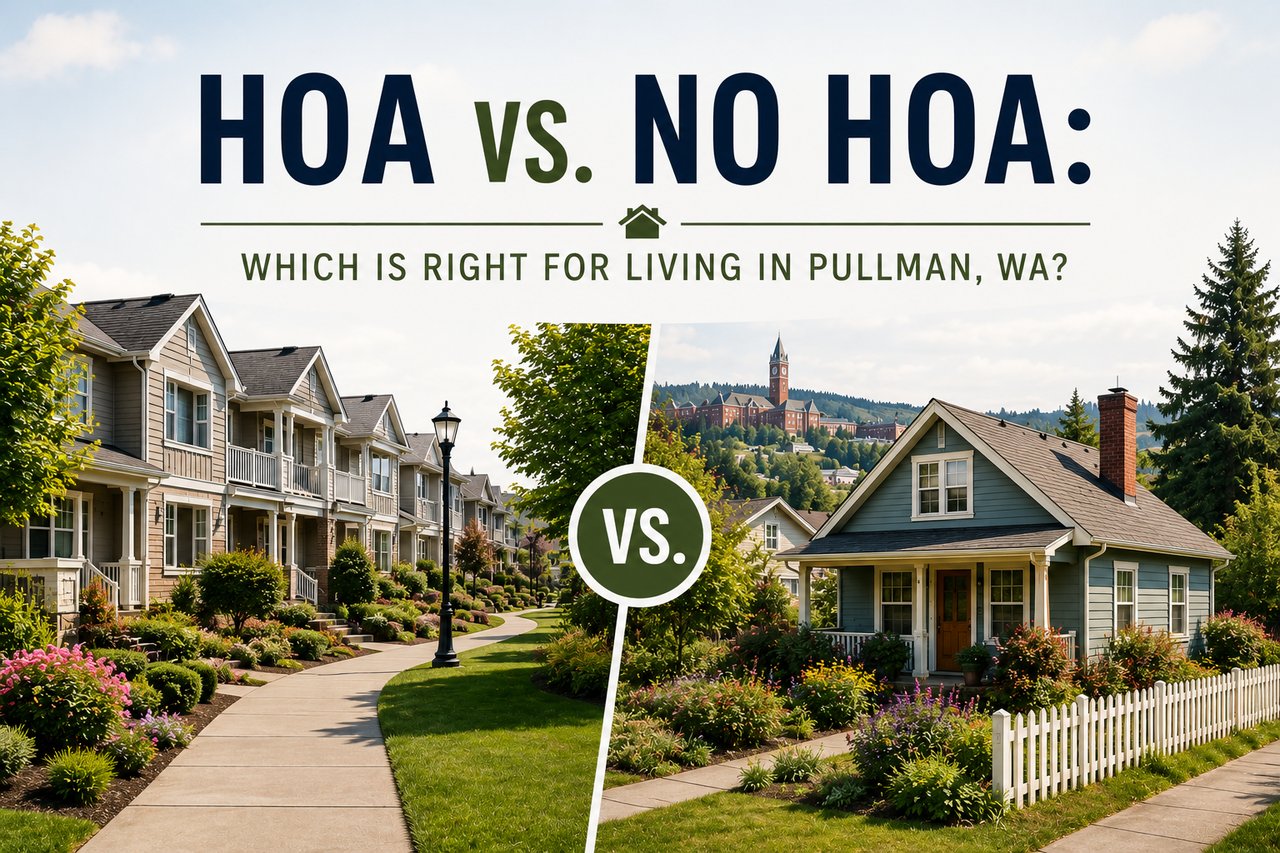
One of the questions many homebuyers ask when searching for homes in Pullman is whether they should purchase a property in a homeowners association (HOA) community or choose a neighborhood without one. The answer isn't always straightforward because the right choice depends on your lifestyle, budget, and long-term goals.
From downtown condominiums and townhomes to established single-family neighborhoods throughout Pullman and nearby Moscow, both HOA and non-HOA properties offer unique advantages. Understanding the differences before you buy can help you choose a home that fits the way you actually want to live.
A homeowners association is an organization responsible for maintaining shared property and enforcing community standards within a neighborhood or residential development. Owners in the community typically pay regular dues that help fund maintenance, insurance, landscaping, amenities, and other common expenses.
Every HOA operates a little differently. Some manage only a few shared spaces, while others oversee extensive amenities such as private roads, landscaping, exterior maintenance, fitness centers, clubhouses, or community gathering areas.
Not every neighborhood in Pullman has a homeowners association. Many established neighborhoods allow homeowners to maintain their own properties without monthly HOA dues or community regulations beyond local ordinances and applicable deed restrictions.
For buyers who value flexibility and independence, a non-HOA neighborhood can provide greater freedom when it comes to exterior improvements, landscaping, parking, and property use.
Many buyers appreciate the convenience that comes with HOA living. Instead of handling every maintenance task individually, homeowners often share the cost of maintaining common areas and amenities.
Depending on the community, HOA benefits may include:
For busy professionals, retirees, first-time buyers, or people relocating to Pullman for work at Washington State University or Schweitzer Engineering Laboratories, these services can reduce ongoing maintenance responsibilities.
Many homeowners prefer having greater control over their property. Without HOA approval requirements, projects like installing a fence, repainting the exterior, parking recreational vehicles, or creating a custom landscape design may involve fewer restrictions, although local building codes and zoning regulations still apply.
Non-HOA neighborhoods may also eliminate monthly association dues, allowing homeowners to decide how and when they invest in maintenance or improvements.
For buyers who enjoy gardening, home improvement projects, or customizing their property over time, this flexibility can be a significant advantage.
Monthly HOA dues vary considerably depending on the neighborhood and the services provided. Some communities have modest fees that primarily cover landscaping and common area maintenance, while others include exterior maintenance, insurance, utilities, or recreational amenities.
Rather than focusing only on the monthly cost, buyers should consider what those dues actually provide. In some cases, paying HOA fees may reduce other maintenance expenses that homeowners would otherwise pay separately.
Before purchasing any HOA property, review the association's financial statements, reserve funds, meeting minutes, governing documents, and any upcoming special assessments. Understanding how the association is managed can provide valuable insight into future costs and responsibilities.
Whether you're considering an HOA community or a non-HOA neighborhood, asking the right questions early can help avoid surprises after closing.
Taking time to review these details before making an offer can help ensure the community matches your expectations and long-term plans.
Every homeowners association has its own governing documents, including covenants, conditions, and restrictions (CC&Rs), bylaws, and architectural guidelines. These rules are designed to maintain the community's appearance and protect property values, but they can also affect how homeowners use their property.
Depending on the community, you may need approval before changing exterior paint colors, installing fencing, adding landscaping features, replacing roofs, or building outdoor structures. Some HOAs also have rules regarding parking, pets, rental properties, holiday decorations, or exterior maintenance.
For many homeowners these guidelines create consistency throughout the neighborhood. Others may prefer the flexibility that comes with owning a home outside an HOA.
Pullman offers a variety of neighborhoods with different lifestyles and housing options. Some newer developments include homeowners associations that maintain common spaces and neighborhood amenities, while many established neighborhoods operate without an HOA.
Areas like Sunnyside Hill, Military Hill, Pioneer Hill, and College Hill each offer their own character, architectural styles, and community feel. Buyers relocating from larger metropolitan areas are often surprised to find that many Pullman neighborhoods provide spacious lots and established landscaping without mandatory HOA dues.
Condominiums and some townhome communities may include associations that handle exterior maintenance and shared building expenses, making them attractive to buyers seeking lower-maintenance living.
Neither option is universally better. The right choice depends on your priorities and how you plan to use your home.
An HOA community may be a good fit if you:
A non-HOA neighborhood may be a better choice if you:
Whether you're purchasing in Pullman or nearby Moscow, taking time to understand the neighborhood can prevent surprises after closing.
Reviewing these details before writing an offer allows you to compare communities based on more than just the purchase price.
Do all neighborhoods in Pullman have an HOA?
No. Many established Pullman neighborhoods do not have homeowners associations, while some newer developments, condominiums, and townhome communities do.
Are HOA fees worth paying?
That depends on the services provided and your personal preferences. Some buyers value the convenience of shared maintenance and amenities, while others prefer to manage their own property without monthly dues.
Can I make improvements to my home if there's an HOA?
Usually yes, but many associations require approval before certain exterior changes are made. Always review the HOA's governing documents before purchasing.
Do HOA communities have higher home values?
Not necessarily. Home values depend on many factors, including location, condition, demand, and market conditions. While some buyers appreciate HOA communities, others actively seek neighborhoods without them.
Should I buy an HOA or non-HOA home?
The best choice depends on your lifestyle, maintenance preferences, budget, and long-term goals. Comparing both options during your home search can help you determine which community fits your needs.
Choosing between an HOA and a non-HOA neighborhood is about more than monthly dues—it's about finding a community that supports the way you want to live. Understanding the benefits, responsibilities, and long-term costs of each option helps buyers make confident decisions that fit both their lifestyle and financial goals.
If you're exploring homes for sale in Pullman, Moscow, or the surrounding Palouse communities, PullmanMoscow.com provides local market insights, neighborhood information, and helpful resources to support your home search. When you're ready for personalized guidance, Jordan Vorderbrueggen can help you compare communities and find the home that best matches your goals.
Browse active listings in the area or contact us for off-market listings.
Have an expert help you find out what your home is really worth.